
Tamal Bandyopadhyay discusses his latest book Bandhan: The Making of a Bank at Bandhan headquarters in Kolkata.
Multiple organisations of different kinds with overlapping goals would be a dream situation for those who believe in competition and innovation.

Ending days of suspense, the Reserve Bank on Wednesday granted banking licences to infrastructure financing firm IDFC and microfinance institution Bandhan from among 25 applicants that included corporate heavyweights ADAG Group, Aditya Birla Group and Bajaj Group.

A vast majority of borrowers are in the essential services' supply chain with tiny and micro businesses, and this has sprung back.

The company is set to be India's first microlender to become a bank
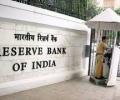
The RBI Governor also reiterated his reservation against repeated loan waivers by various state governments, saying the move distorts credit pricing, thereby also disrupting the credit market.

These banks need to build a significant deposit base to start full-fledged banking.

While the total disbursement of housing loans by PSBs as well as HFCs witnessed a deceleration in 2016-17, there was significant growth for the lower slabs

One can expect significant changes at India's banks in ensuing months.

What is it about Arohan that puts it in the top league of microfinance institutions in the country?

Tamal Bandyopadhyay offers some unsolicited advice for a government wh,ich came to power, with brute majority and the nation's pragmatic chief money man.

To help revive the economy battered by COVID-19, Finance Minister Nirmala Sitharaman on Monday announced a slew of measures, including Rs 1.1 lakh crore credit guarantee scheme for improving health infrastructure, and enhancing the limit under the ECLGS by 50 per cent to Rs 4.5 lakh crore for the MSME sector facing liquidity crunch. Sharing the details of stimulus package, the finance minister said this comprises eight relief measures and other eight measures to support the economic growth. She announced Rs 1.1 lakh crore loan guarantee scheme for COVID-affected sectors, including health sector, which includes guarantee cover for expansion or for new projects. Besides, she said, additional Rs 1.5 lakh crore limit enhancement done for Emergency Credit Line Guarantee Scheme (ECLGS) scheme.
The committee said that to qualify as an NBFC-MFI, an NBFC should provide financial services predominantly to low-income borrowers.

The move to ban Rs 500 and 1000 notes may not curb the root cause of black money.
The government has released the draft Micro Financial Sector (Development and Regulation) Bill, 2011, which seeks to make it mandatory for all microfinance institutions to be registered with the Reserve Bank of India, making it the sector regulator.

"People forgot about income for farmers. But for the first time, this thinking has been changed," he said and listed steps the Centre has taken for the welfare of farmers.

There are allegations that MFIs are charging exorbitant interest rates and using strong-arm tactics to recover the loans.

The finance ministry's plan to offer basic banking licences may find few takers because of doubts over the commercial viability of the proposed business model.
An eclectic mix of Radias, Ambanis and Akulas hogged the headlines this year, with many an unfolding plot promising eventful corporate tales in 2011.

The year 2010 was a tumultuous one for micro-finance institutions (MFIs) in India.

Stocks of most non-banking finance companies (NBFCs) were on a crash course on Wednesday, with the Reserve Bank of India excluding loans given to the sector from the priority sector list.

In the backdrop of questions on functioning of microfinance institutions (MFIs), Chief Economic Advisor to the government of India, Kaushik Basu, has called for regulating MFIs for more transparency in their loan contracts with the beneficiaries. However, he also warned that over-regulation of MFIs could imperil their survival.

'In the end, investing is about people.' 'If you get the right people, they make things happen,' Mengistu Alemayehu tells Shyamal Majumdar.

As many as 61 companies hit the primary market in the 2010-11 fiscal.

The Bill's 2007 version covered only MFIs not regulated by the Reserve Bank of India.

According to estimates, there is a possibility of $24 billion being raised from major IPOs, including that of Coal India, SBI and Indian Oil, for the balance period of 2010-11.

After raising Rs 1,600 crore through an initial public offer in August, the Hyderabad-based company on October 4 terminated the services of Gurumani four years ahead of the expiry of contract and named M R Rao as his successor. Gurumani had a five-year contract starting from April 1, 2009.

Micro-finance institutions (MFIs) are planning to take legal action against YES Bank's move to recall a part of its loans to them.

The Reserve Bank of India (RBI) has clarified that loans which have remained standard without any defaults as of March 1, 2020, will be eligible for restructuring under the pandemic-related resolution framework issued in August.

Looking inward, innovating for the Indian market, and IT-led innovation to make possible no-frills accounts and microfinance loans will be key elements of the medium-term strategy for corporate India.
One of India's most successful bottom-of-the-pyramid entrepreneurs parries questions on several issues that have arisen around his venture.
Banks in India have to live by the quality of their service, not anti-competitive practices

Bandhan Financial Services, which was given a banking licence on Wednesday, hopes to come up with a unique business model, with a mix of doorstep and retail banking.

Five to six issues may hit the market if Chalet Hotels's IPO is successful and if there are no negative surprises in the Union Budget on February 1.
Piyush Goyal emphasised that India is committed to pursue a green path to growth.

Professor Yunus is the first Sakal Person of the Year.

'We are very watchful about inflation and growth. But the main challenge is economic revival and growth.'

Investors engaged in profit booking in the recent gainers at attractive and higher valuations.

'India has been cleaved into two by a government that has shown amazing consistency in cleaving.' 'One India is gasping for life, and the other is doing yoga and clapping from balconies and WhatsApp groups,' observes Debashish Chatterjee.
Increased bank interest rates and new capital adequacy norms of the Reserve Bank of India will soon weigh heavily on the poorest of the poor as microfinance institutions are also contemplating raising interest rates.
 © 2026 Rediff.com - Advertise with us - Disclaimer - Privacy Policy - Sitemap - Feedback - About us - Terms of use - Grievances